
AI Story Generator: Your Complete Guide to Writing Stories with AI
Discover how an AI story generator can transform your creative ideas into complete novels. Learn why writers need AI assistance, what makes FlowFiction different, and get a step-by-step guide to our 6-stage story creation process.
Your Ideas Deserve to Become Real Stories
We all have stories inside us—adventures waiting to unfold, characters begging to be brought to life, worlds that exist vividly in our imagination. But here's the thing: turning those brilliant ideas into an actual, complete story? That's where most of us get stuck.
Maybe you've got a thrilling plot twist in mind but can't figure out how to build up to it. Perhaps you know exactly who your hero is, but developing supporting characters, world-building details, and chapter-by-chapter progression feels overwhelming. You're not alone.
That's exactly why an AI story generator exists—to bridge the gap between "I have an amazing idea" and "I wrote an amazing story." Let's explore how AI-powered story generation works, why it matters, and how FlowFiction's AI story generator helps you turn creative concepts into complete novels.
Why Writers Need an AI Story Generator
The Writing Challenge Most People Face
Here's a truth we don't talk about enough: having great story ideas is common. Turning them into compelling narratives is rare.
Most people can imagine vivid scenes, interesting characters, and emotional story arcs. What stops them isn't a lack of creativity—it's the technical skill required to structure plots, maintain character consistency, manage pacing, and develop all those "in-between" moments that connect the exciting scenes in your head.
Professional novelists spend years mastering these skills. But what if you don't have years? What if you just want to tell your story now?
An AI story generator doesn't require you to become a literary expert first. It helps you organize scattered ideas into clear narrative structures, suggests character developments you might not have considered, and fills in the framework so you can focus on what makes your story uniquely yours.
AI in Writing: The Shift Is Already Happening
For professional writers, AI collaboration isn't some distant future—it's happening right now.
According to research from Graphite analyzing content across the web, something remarkable happened after ChatGPT launched in November 2022: within just 12 months, AI-generated articles accounted for nearly 39% of all published content.
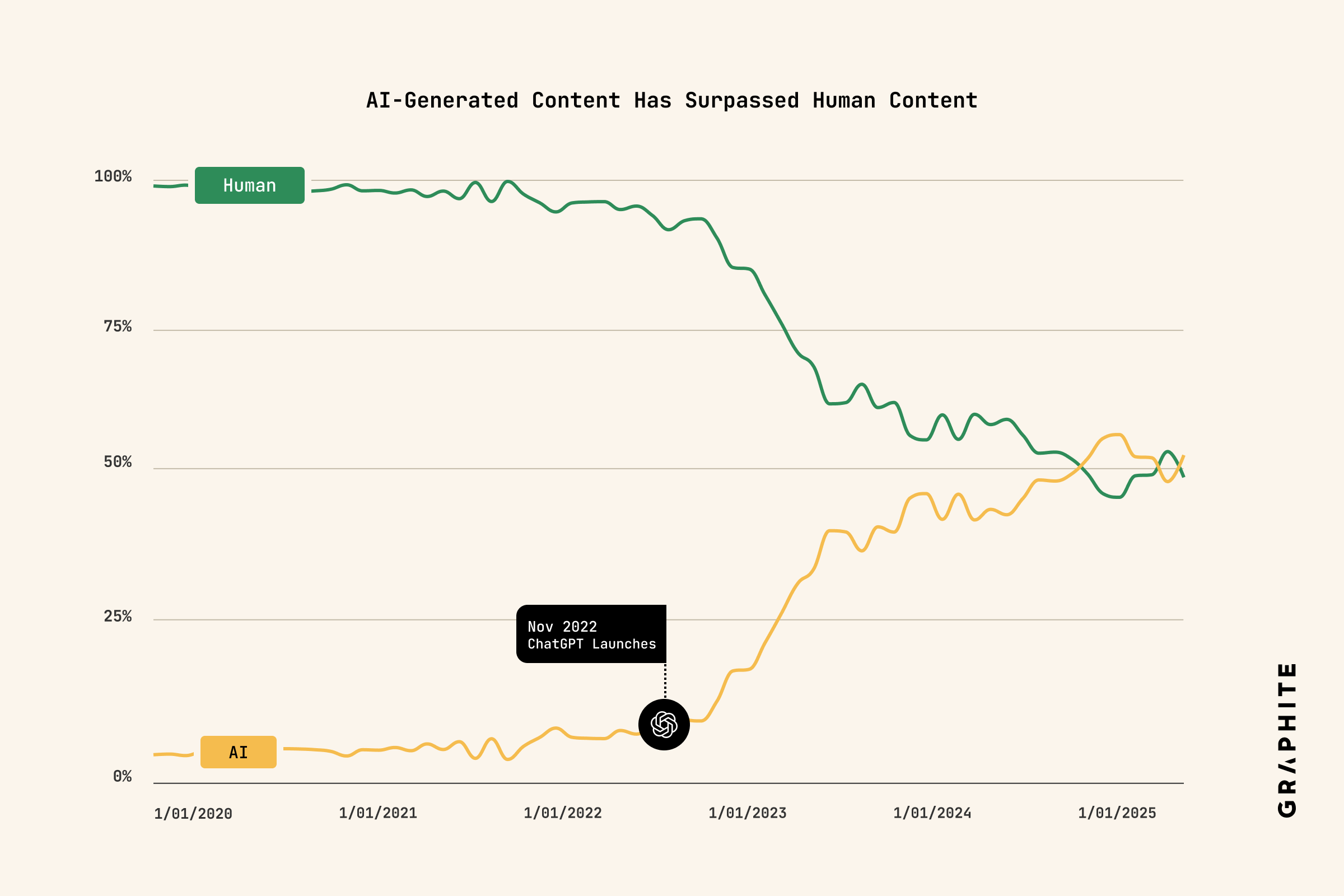
Source: Graphite - More Articles Are Now Created by AI Than Humans
This isn't about AI replacing writers. It's about AI amplifying what writers can achieve. Think of it like any other creative tool—cameras didn't kill painting, but they gave us photography. Digital audio workstations didn't replace musicians, but they made music production accessible to millions.
An AI story generator is the same kind of tool: it helps you do more, faster, without sacrificing the creative vision that makes your story worth telling.
Ready to see how it works? Start creating your story with FlowFiction.
Current AI Writing Tools: What's Missing?
Not all AI story generators are created equal. Let's look at what's currently available and where each type falls short.
| Tool Type | Specialization | Ease of Use | Long-Form Support | Consistency | Collaborative Editing |
|---|---|---|---|---|---|
| General LLM Providers | ⭐ | ⭐⭐ | ⭐⭐ | ⭐⭐ | ⭐ |
| Multi-Tool AI Platforms | ⭐⭐ | ⭐⭐⭐ | ⭐⭐ | ⭐⭐⭐ | ⭐⭐ |
| Other Story Generators | ⭐⭐⭐ | ⭐⭐⭐ | ⭐⭐ | ⭐⭐ | ⭐⭐ |
| FlowFiction | ⭐⭐⭐⭐⭐ | ⭐⭐⭐⭐⭐ | ⭐⭐⭐⭐⭐ | ⭐⭐⭐⭐⭐ | ⭐⭐⭐⭐⭐ |
What each rating means:
- Specialization: How deeply optimized the tool is specifically for story writing (not just general text generation)
- Ease of Use: Whether you need technical knowledge like prompt engineering or can simply focus on creative decisions
- Long-Form Support: Ability to handle novel-length projects without running into length limits or performance issues
- Consistency: How well the tool maintains character personalities, plot coherence, and world-building details across thousands of words
- Collaborative Editing: Can you iterate on AI-generated content, refining and adjusting until it matches your vision?
General LLM Providers (like using ChatGPT or Claude directly) are incredibly powerful, but they're built as general-purpose models—not story-writing specialists. You need to understand prompt engineering, manage conversation context carefully, and manually track your story's continuity. The technical barriers are real.
Multi-Tool AI Platforms offer dozens of AI features, and story generation might be one of them. While they provide some specialized templates, the story generator is rarely their main focus. You'll often hit word count limits or find that long-form narrative consistency wasn't their primary concern.
Other Story Generators are purpose-built for writing, which is great! But many struggle with novel-length projects. Character consistency can break down across chapters. Plot coherence gets fuzzy. Performance slows. And collaborative editing—the back-and-forth between you and AI to refine the output—is often limited.
FlowFiction is designed from the ground up specifically to solve these problems. We focus exclusively on story writing, which means every feature, every optimization, and every design decision serves one goal: helping you write complete, coherent, engaging stories with AI assistance.
How FlowFiction Defines AI Story Generation
AI as Partner, Not Replacement
Let's be clear about something important: the best stories come from human creativity amplified by AI capability, not AI working alone.
While our AI story generator technically can create an entire story if you just select a genre, length, and a few tags, we don't recommend using it that way. Why? Because that produces generic, formulaic stories that could have been written by anyone.
Your story should be yours—infused with your unique perspective, your creative choices, your vision. The AI story generator exists to help you develop that vision, not to replace it.
Think of it like a co-writing partner who's excellent at structure, pacing, and filling in details, but who defers to you on creative direction. You decide the story's soul; AI helps build the body.
Focused on Story Writing, Built for Writers
We don't try to be everything to everyone. We're not building a platform with 50 different AI tools where story generation is feature #37.
We're focused exclusively on making story writing better. Every feature we add, every improvement we make, every optimization we implement—it all serves writers creating stories.
Yes, our genre selection is still growing. Yes, our tag library could be more comprehensive. Yes, there are advanced features we haven't built yet. We're honest about that.
But here's what matters: we're committed to this specific craft. Your feedback directly shapes what we build next. The challenges you face in story writing become our engineering priorities.
Want to share what would make the AI story generator more useful for you? Email us at support@flowfiction.com—we read every message, and many of our best features came from user suggestions.
Hiding Complexity, Delivering Results
One of the hardest parts of using AI for creative work is dealing with technical limitations: token limits, context windows, prompt engineering, consistency management, performance optimization.
You shouldn't have to think about any of that.
Our AI story generator handles the technical complexity behind the scenes:
- No length limits holding you back from writing novels
- Automatic consistency tracking so your characters stay true to their personalities across all chapters
- Coherent plot progression maintained from your story's opening to its finale
- Optimized performance even when generating tens of thousands of words
You focus on creative decisions. We handle the technical infrastructure.
How to Use FlowFiction's AI Story Generator: Complete Guide
Ready to transform your story idea into a complete manuscript? Here's exactly how FlowFiction's AI story generator works, step by step.
Step 1: Shape Your Story's Foundation
Every great story starts with a clear foundation. In this first step, you'll define the core elements that shape your narrative:
- Choose Your Genre: Romance, YA Romance, Progression Fantasy, LitRPG, Adventure, and more
- Set Your Story Length: Short Story, Novella, or Novel
- Add Defining Tags: Up to 5 tags that capture your story's unique flavor (like "second chance," "enemies to lovers," "magic system," "coming of age")
Pro tip: You can manually fill these out or use our "AI Quick Generate Story Foundation" feature to get AI-suggested options based on a brief description of your idea.
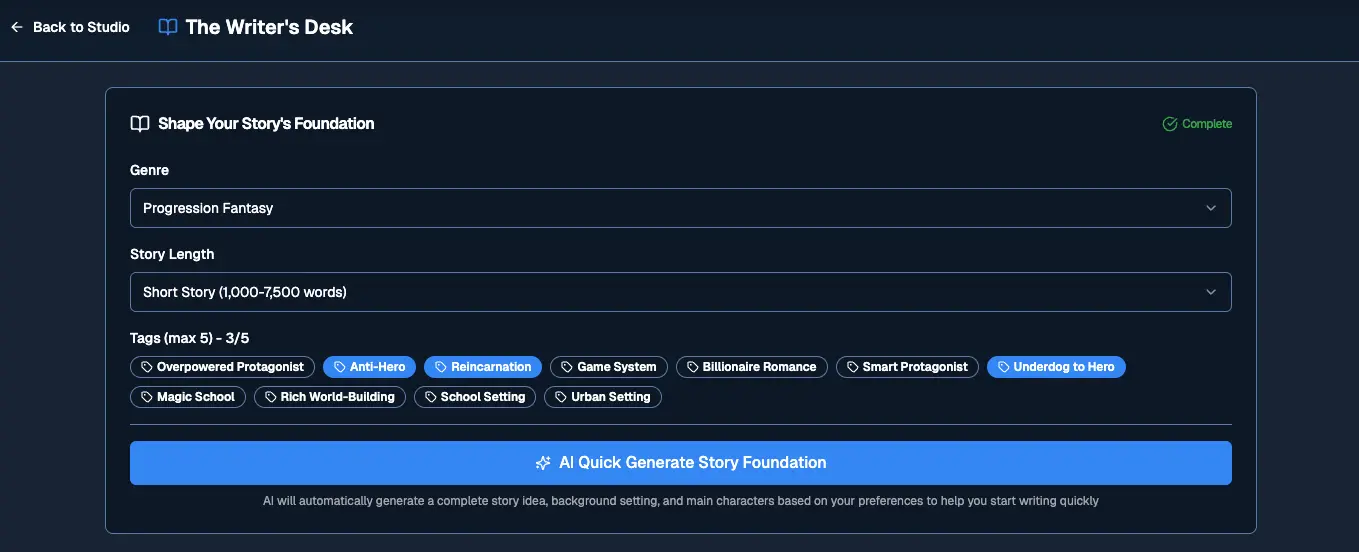
This foundation guides everything that comes next. The AI story generator uses these choices to ensure generated content matches your intended style and structure.
Step 2: Craft Your World with Our Story Generator
Now it's time to build the world and characters that bring your story to life. FlowFiction's AI story generator helps you develop five essential elements:
- Story Idea: Your core concept and premise
- Background Setting: The world, time period, and context where your story takes place
- Protagonist: Your main character, including name, personality, and background
- Supporting Characters: Up to 5 additional characters who populate your story
- Story Name: A compelling title that captures your narrative
Each element has an AI generation button that creates content based on your foundation from Step 1. But here's the crucial part: you can edit everything.
Don't like the AI's suggestion for your protagonist's background? Change it. Want to adjust the setting details? Go ahead. The AI story generator provides the starting point; you refine it into exactly what you envision.
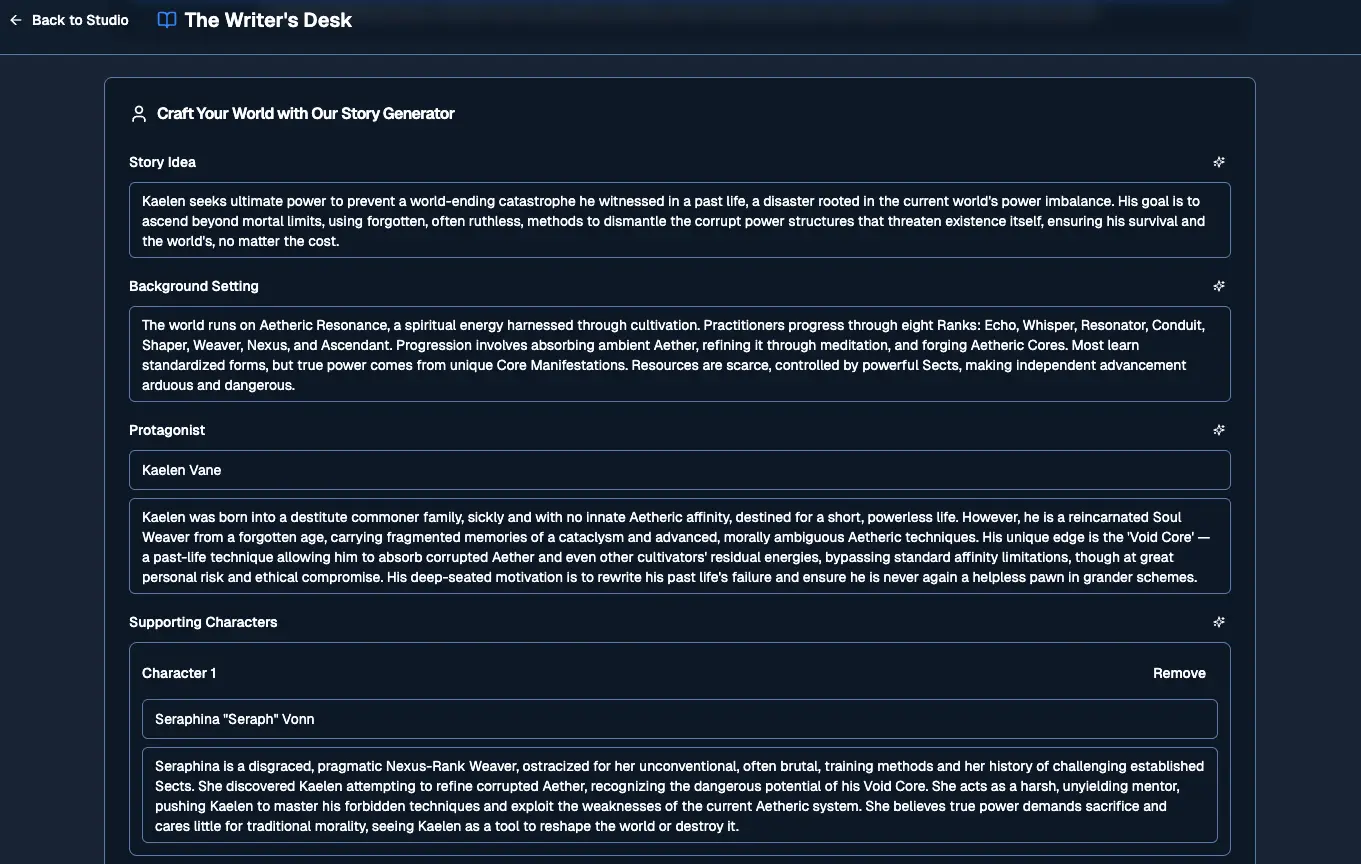
This collaborative editing approach ensures the story stays true to your vision while saving you from staring at a blank page.
Step 3: Generate the Main Plot with Our Story Generator
With your world and characters established, it's time to structure your complete narrative.
Click "Generate Story Outline" and watch the AI story generator analyze everything you've created so far—your genre, length, tags, characters, and setting—and produce a detailed, chapter-by-chapter outline of your entire story.
You'll see a visual structure showing your story's acts, chapters, and key plot points. This isn't just a vague outline; it's a complete roadmap from your opening scene to your final chapter.
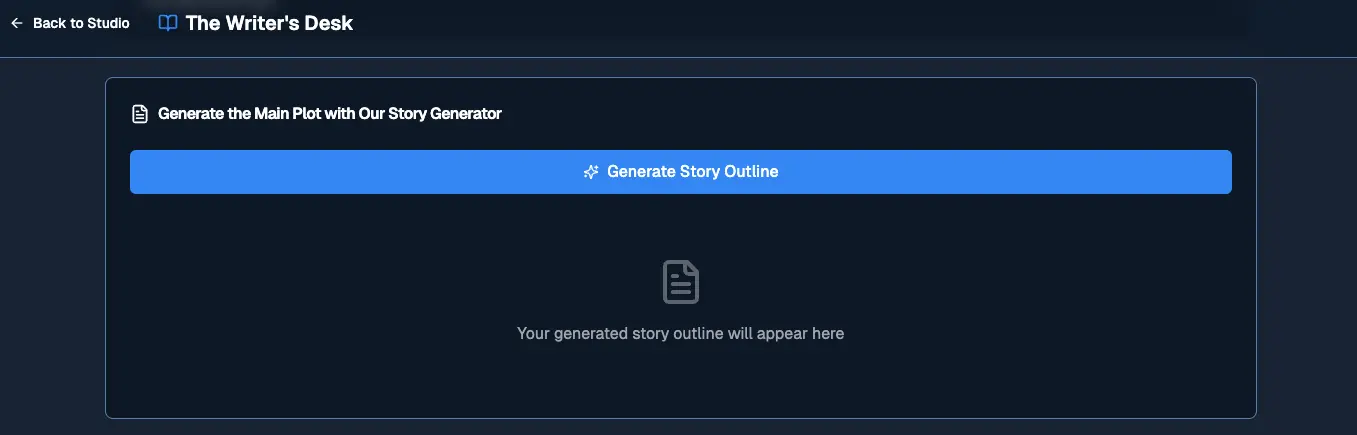
Important note: After generating your story outline, you'll need to save your story—which requires creating a free account. Sign up here to continue.
Once saved, you can return to your story anytime and pick up exactly where you left off.
Step 4: Outline Details Creation
Your outline gives you structure; now it's time to add depth.
In Step 4, the AI story generator expands each section of your outline into detailed descriptions. Instead of just "Chapter 3: The Discovery," you'll get a comprehensive breakdown of what happens, which characters are involved, key emotional beats, and how this chapter connects to the larger narrative.
You can work through this collaboratively:
- Generate details for one section, review and edit, then move to the next
- Or use "Generate All Outline Details" to create everything at once, then refine each section afterward
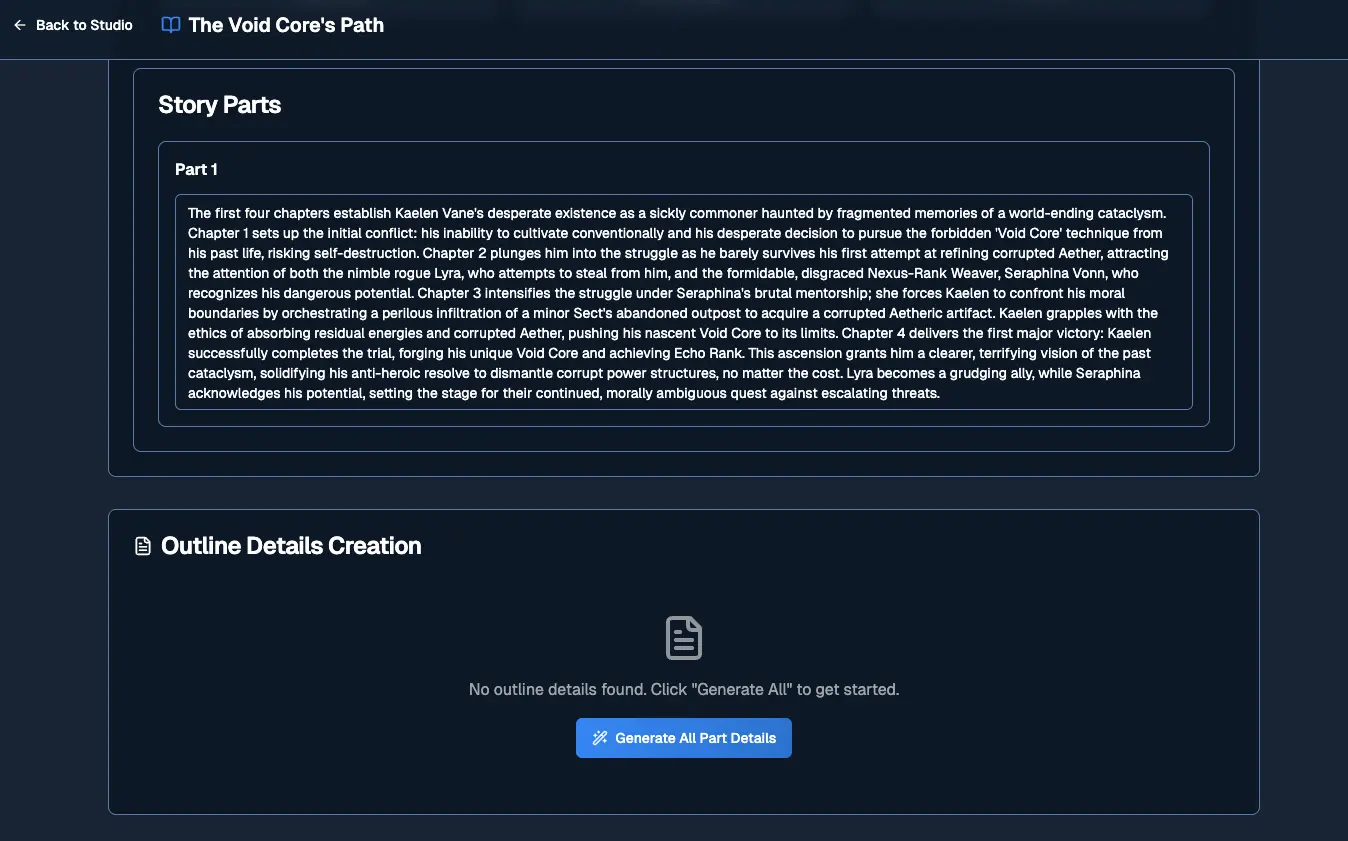
Remember: AI generates the foundation, but you're always in control. Edit, adjust, and shape these details until they perfectly match your creative vision.
Step 5: Chapter Summary Creation
With detailed outlines in place, the AI story generator now creates chapter blueprints—comprehensive summaries for each individual chapter.
These chapter summaries go beyond basic plot points. They include:
- Specific scenes and their sequence
- Character interactions and development moments
- Emotional arc within the chapter
- How the chapter advances the overall plot
Each chapter summary serves as your guide when you're ready to write the full chapter content. Think of it as a detailed roadmap for that specific section of your story.
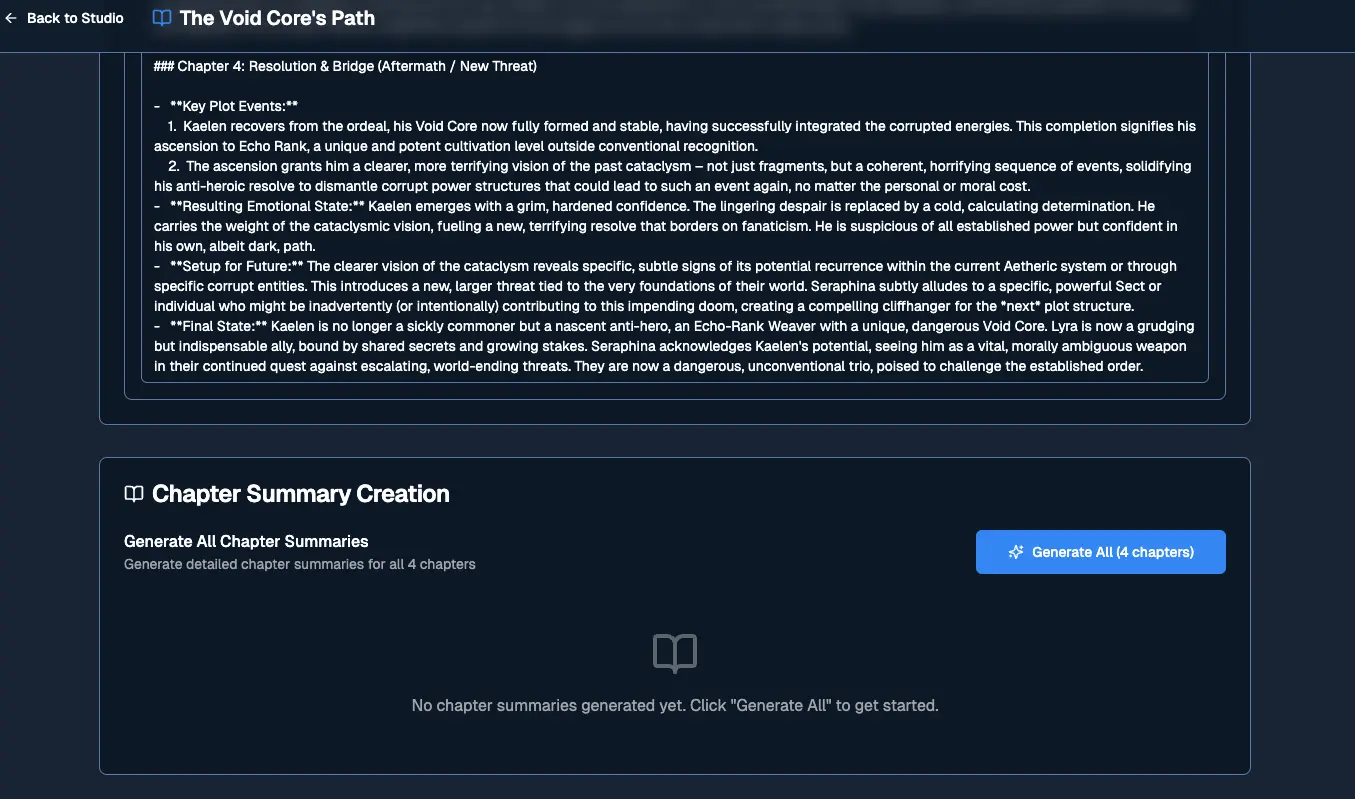
And yes—you can edit every chapter summary. Adjust pacing, change plot points, refine character moments. The AI story generator provides structure; you provide the creative direction.
Step 6: Generate All Chapter Details
This is where your story truly comes to life. The AI story generator transforms each chapter summary into complete, fully-written chapter content.
You have two options:
- Generate chapters one at a time: Write and refine chapter by chapter
- Batch generate all chapters: Create the entire manuscript, then edit and polish
Either way, once generated, every chapter opens in a dedicated chapter editor where you can collaborate with AI to refine the prose, adjust scenes, and perfect the storytelling.
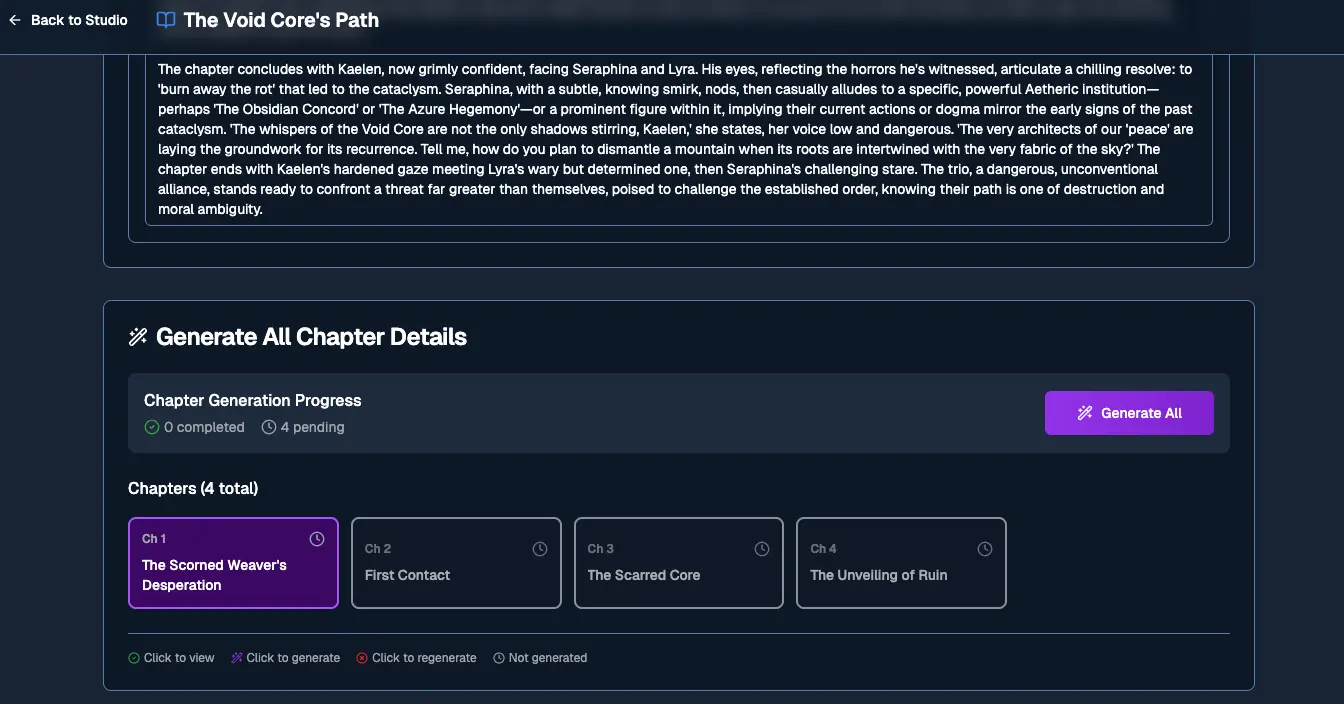
This is your manuscript. The AI story generator has done the heavy lifting of turning outline into prose, but you're the author—edit freely, rewrite sections, and make it yours.
Your Story, Completed
From initial concept to full manuscript, FlowFiction's AI story generator guides you through a structured, collaborative creative process.

FlowFiction's complete AI story generator workflow: from idea to manuscript
Ready to start? Begin creating your story today—no registration needed to explore the first steps and see how the AI story generator works.
What's Next: Our Roadmap
FlowFiction is growing based on what you—our community of writers—actually need.
Here's what we're working on, all driven by user feedback:
- Expanded Genres and Tags: More story categories, more specific tags to define your unique narrative
- Enhanced Collaboration Features: Better tools for iterating with AI, saving alternate versions, and experimenting with different creative directions
- AI Model Improvements: Continuously upgrading our AI's understanding of narrative structure, character development, and genre conventions
- Export Format Options: More ways to export your finished manuscript for publishing, sharing, or further editing
Every feature we build starts with listening to writers like you. What would make the AI story generator more useful for your creative process?
Share your ideas with us at support@flowfiction.com—your feedback literally shapes our development roadmap.
Start Writing Your Story Today
The gap between "I have an idea" and "I wrote a story" doesn't have to be so wide.
An AI story generator won't write your story for you—but it will help you write the story you've been imagining. It provides structure when you need it, generates content to overcome blank page paralysis, and handles the technical complexity of long-form narrative development.
FlowFiction is built specifically for this: turning your creative vision into a complete, coherent manuscript through human-AI collaboration.
Start creating your story now—free to try, no credit card required, and no registration needed to explore how our AI story generator works.
Your story deserves to exist. Let's build it together.
Questions? Ideas? Feedback?
We'd love to hear from you at support@flowfiction.com
The Flow Fiction Team